


Sales
13809631553
After-sales service
13713127352






Category: Magnetic Component Ate Testing Equipment
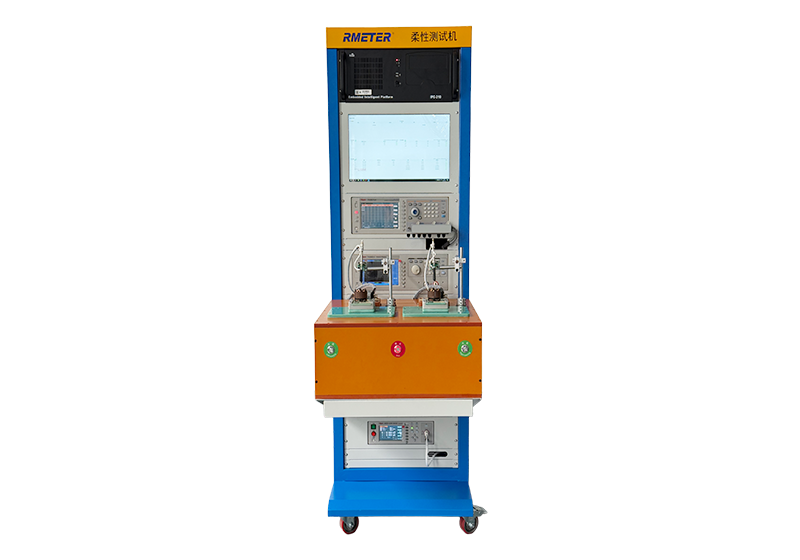
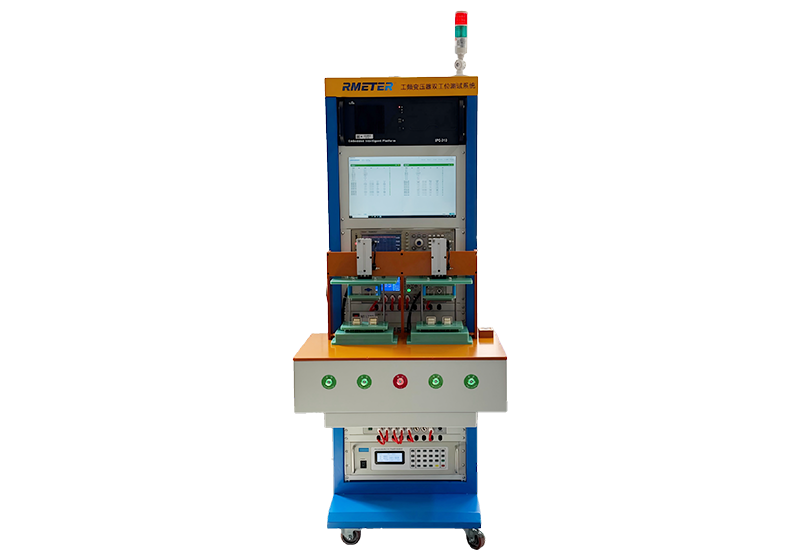
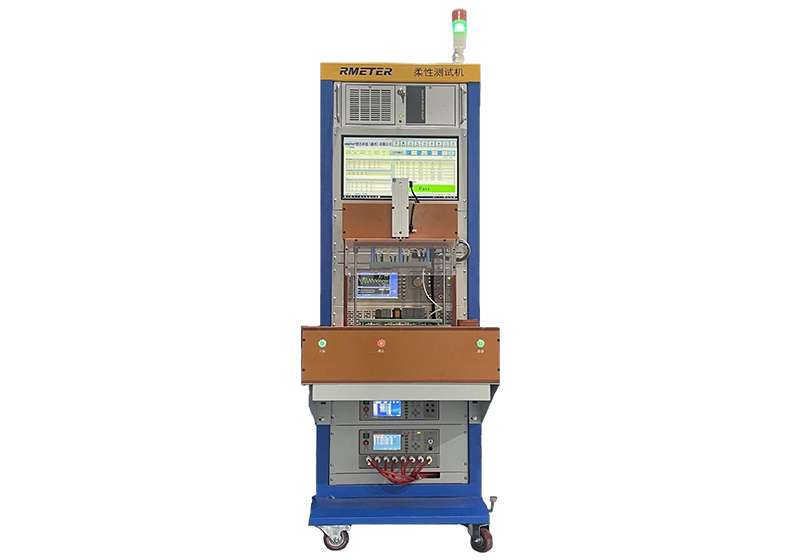
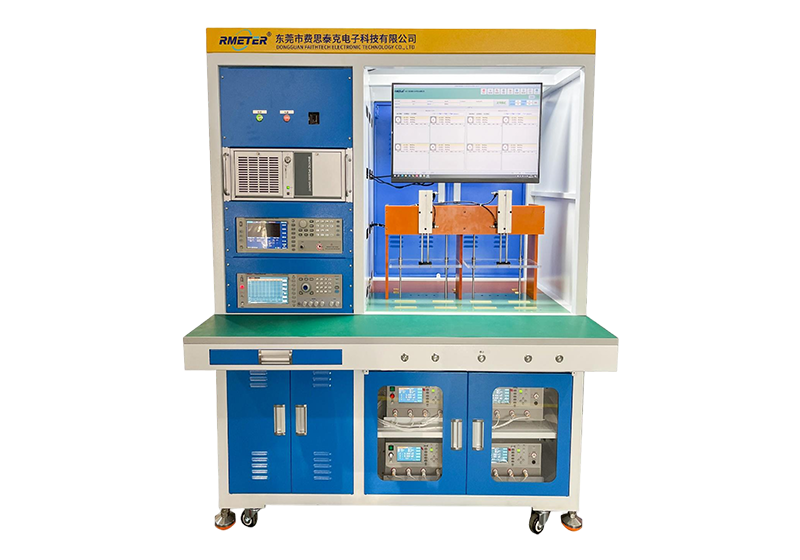
The testing efficiency is high, allowing for the switching between approximately 4 products simultaneously, with a maximum testing capacity of 900 to 1200 products per hour. The fixture changeover is quick, with the changeover time for different fixtures being less than 15 minutes. The integration of three workstations into one saves labor and enhances testing efficiency. Fingerprint recognition login enhances the security and confidentiality of the equipment.
Test function
Barcode scanning: incorrect barcodes, duplicate barcodes, out-of-station detection, and barcode binding, etc
Voltage resistance/insulation: AC, DC, IR, conduction, etc
Interlayer insulation: area, area difference, etc
Comprehensive testing: inductance, leakage inductance, turn ratio, DCR, etc
DC low resistance: for values less than 10mΩ, with a minimum of 0.5mΩ
Real-time data statistics: capacity analysis, yield analysis, CPK analysis, chart analysis; retrieval, query, and export
Equipment features
The testing efficiency is high, with the ability to switch between approximately 4 products simultaneously, achieving a maximum testing capacity of 900 to 1200 products per hour
The fixture changeover speed is fast, with the changeover time for different fixtures being less than 15 minutes
Integrating three workstations into one saves labor and enhances testing efficiency
Fingerprint recognition login enhances the security and confidentiality of the device
Integrated with a dedicated standard cabinet, it occupies a small area
Unlock with fingerprint recognition permission to ensure that defective products do not proceed to the next process
Equipped with a standard MES docking interface, it facilitates data storage and traceability
Barcode scanning can prevent duplicate and incorrect codes, and test data is bound to the barcode
Equipped with its own database, it can perform data statistics and chart display even on a standalone machine
Self-developed dedicated controller, safe, reliable, simple, and efficient
Basic system architecture
Configuration: industrial computer, scanner, customized fixture
Communication: RS232, RS485, LAN port Equipment: testing instruments (voltage tester, comprehensive tester, voltage tester, resistance tester) Database: data upload, generate tables, data retrieval
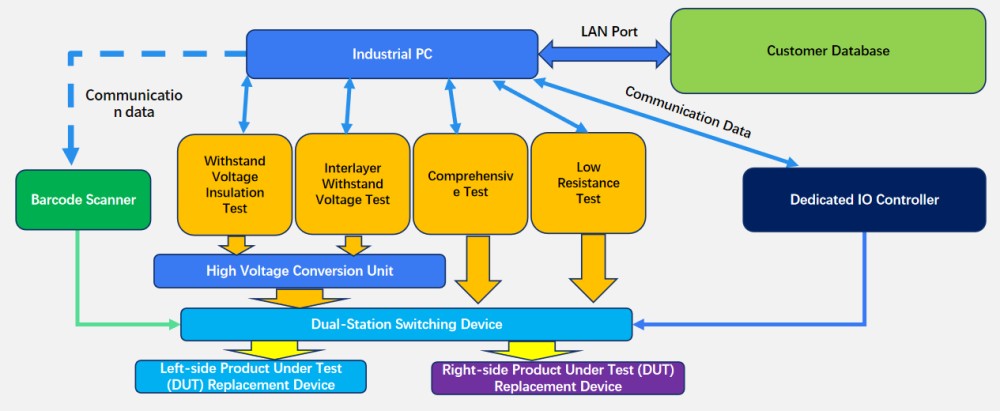
The schematic diagram is shown in the figure
System functions
Login options
The user login scheme is as follows:
1. Testers need to enter their username and password, while production line managers need to scan their fingerprints for confirmation and login
2. Ensure the authenticity and reliability of the data
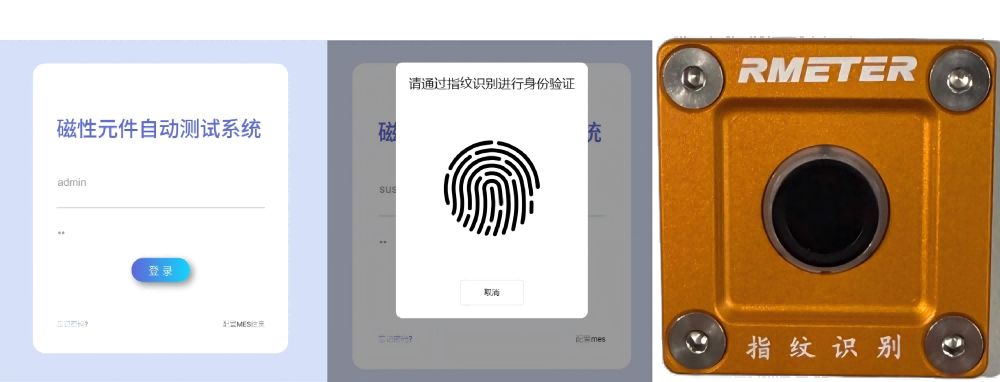
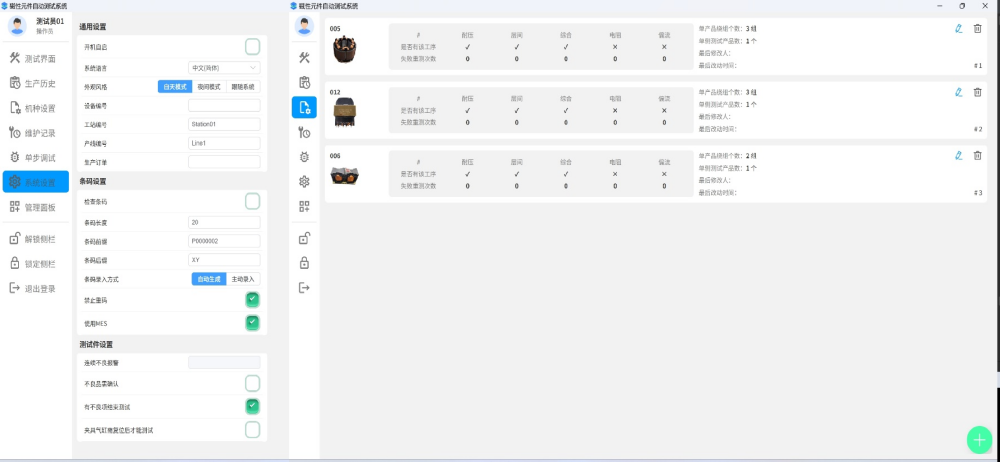
System settings & model settings
The setup plan is as follows:
1. Equipment management: equipment number, equipment location, instrument composition, equipment status, etc
2. Machine type management: parameter settings (quantity, order number), custom product name for machine type files, one-to-one correspondence
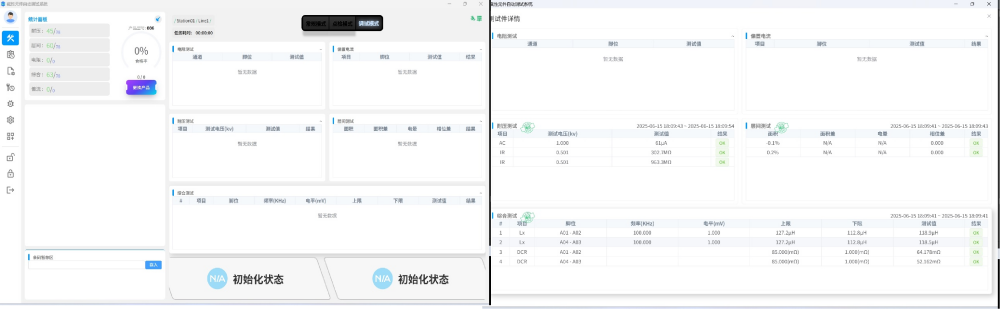
Test interface & data details
Data visualization: real-time data, test parameters, conditions, quantity
1. Each instrument has a separate display of test details (setting conditions, parameters, results, test items)
2. Defective products will be marked in red, and NG data can be extracted separately
3. All data can be converted into Excel for real-time viewing
Data Export & Data Retrieval
Data management: Automatically generate Excel spreadsheets or save to the MES system or database
| Data Export | |
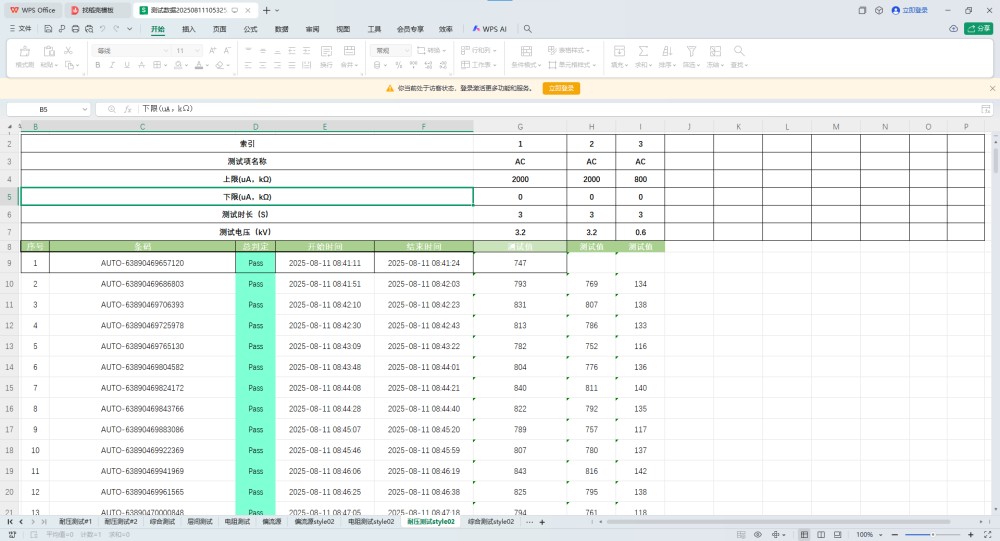 | Export format 1. Multiple entries. Default CSV format. Can be used in EXCEL 2. Single entry: Generate a separate page for each data entry. 3. Statistical charts: Bar chart, pie chart, histogram |
Database 1.All data is stored in the database and can be directly accessed. 2. For customers without a database, it will be automatically generated on the local disk, and the placement location (desktop/D drive) can be selected | |
| Data Retrieval | |
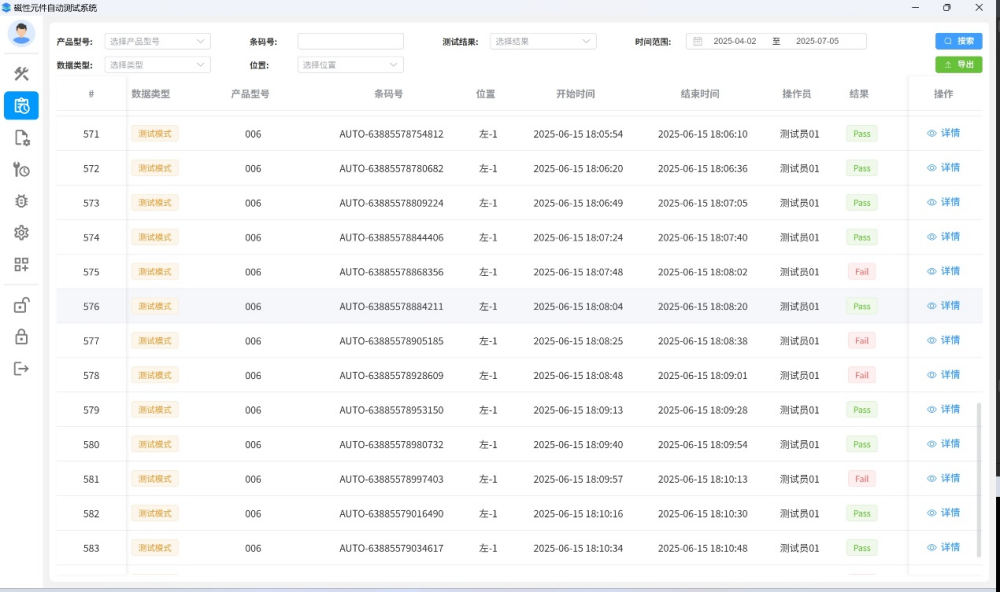 | Historical information query 1. Various combinations of conditions can be used to query historical data, including production date, work order number, product model, batch, test results, etc. 2. PASS/FAIL/All can be extracted and generated individually. 3. Supports custom layout in Excel |
Support barcode function The barcode scanner scans the QR code and automatically generates a data code | |